


If your calendar looks "full" but your affiliate program still feels behind, you're not lazy. You're leaking time.
Affiliate management has a special talent for turning simple tasks into all-day events: endless recruitment outreach, partner follow-ups that never end, manual compliance checks, reporting chaos, and the constant handoff problem between you, creative, finance, and paid media.
This post isn't a random list of apps. It's a simple framework to reclaim 10 to 20 hours per week by fixing the biggest time sinks first. You'll walk away with a stack you can copy, plus a weekly flow that actually sticks.
First, let's get honest about where your time goes, then we'll talk tools.
Why affiliate management eats your calendar (and what it really costs)
Most affiliate managers don't "run out of time." They run out of clean systems. The day starts with good intentions, then turns into a pinball machine: Slack pings, a partner asking for a new link, a "quick" reporting request, a compliance issue that can't wait.

This hits agency teams, in-house teams, and networks the same way. The details change, but the pattern stays: too many moving parts, not enough "single source of truth."
The hidden time drains that sneak up every week
Here's where the hours quietly disappear:
● Manual partner discovery across search, social, and list sites
● Email back-and-forth onboarding (forms, tax docs, tracking questions)
● Chasing missing assets from creative, product, or the partner
● Updating spreadsheets that instantly go stale
● Compliance monitoring (disclosures, brand terms, promo rules)
● Reporting across platforms (network UI, GA, internal dashboards)
● Context switching between chat, email, docs, and tracking tools
The real killer is the switching. Each jump feels small. Add it up and your week is gone.
What happens when you do nothing
When you keep the current setup, the program doesn't "stay the same." It slowly slips.
Activation gets slower because partners don't get nudged at the right time. Promo windows get missed because updates arrive late or land in the wrong inbox. You end up firefighting instead of building relationships. And when someone's out sick, handoffs break because the history is stuck in one person's head.
That's the quiet cost: less growth, more stress, and fewer high-quality partner conversations.
What makes a tool actually time-saving (the filters behind this list)
A tool only saves time if it removes friction you feel every week. If it creates more logins, more steps, or more "where did we put that?" it's not a time saver. It's an expensive hobby.
Use these filters to judge any tool, even ones not mentioned here.
The three filters: remove repeat work, centralize the truth, scale without headcount
Remove repeat work means the tool handles the same task the same way, every time. For example, automatic follow-up nudges prevent the classic "I meant to reply" gap.
Centralize the truth means partner status, notes, assets, and next steps live in one place. If your team can't answer "where are we with this partner?" in 10seconds, you're paying a tax.
Scale without headcount means it still works when your partner count doubles. If onboarding collapses at 80 partners, it's not scalable. It's fragile.
A simple warning before you buy anything
Tools don't fix messy processes. They amplify them.
If you haven't defined your basic flow(recruit, onboard, activate, optimize, protect), tool bloat will hurt you. More tabs won't create more clarity.
Start with one bottleneck, usually recruitment or reporting. Fix that first, then build.
The 7 time-saving tools for affiliate managers (and the exact job each one does)
These Tools for Affiliate Managers map to the real work: recruit faster, run smoother, and protect the program. Each section tells you what it's best at and how to start using it this week.
1. Endorsely: The backbone of your affiliate program
No affiliate program can run without a solid tracking and management platform – and that’s where Endorsely comes in.
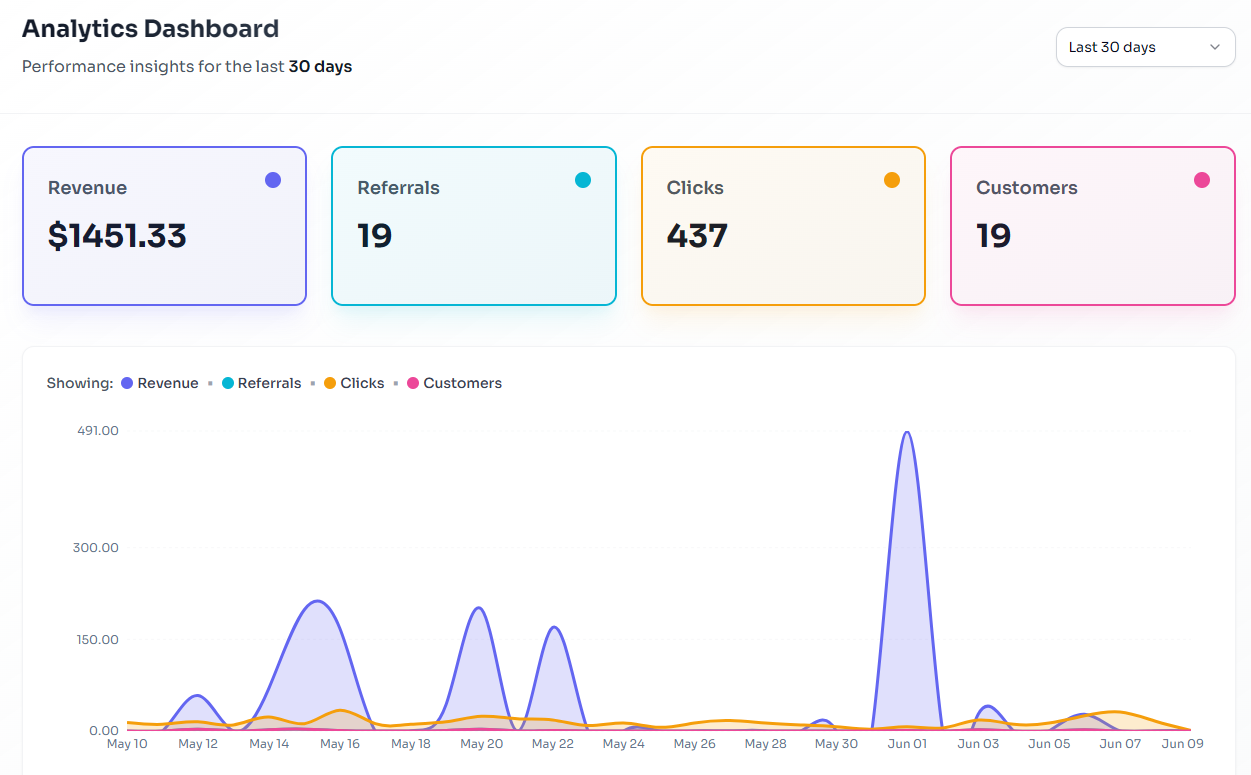
Most affiliate tracking tools were built for e-commerce, and SaaS programs end up bending the tool to fit. Endorsely skips that compromise. It combines program management and link tracking in a single platform designed specifically for SaaS affiliate programs, so every partner has their own tracked link, every conversion ties back to the right affiliate, and your data stops living in three different places at once.
If you're frustrated with a tool that wasn't built for your model, or you're about to launch a SaaS affiliate program and want to start on the right foundation, this is the platform worth building on. Even better, it's free until you hit $1k/month in affiliate revenue.
2. AffiliateFinder.ai: Speed up partner sourcing so outreach stays consistent
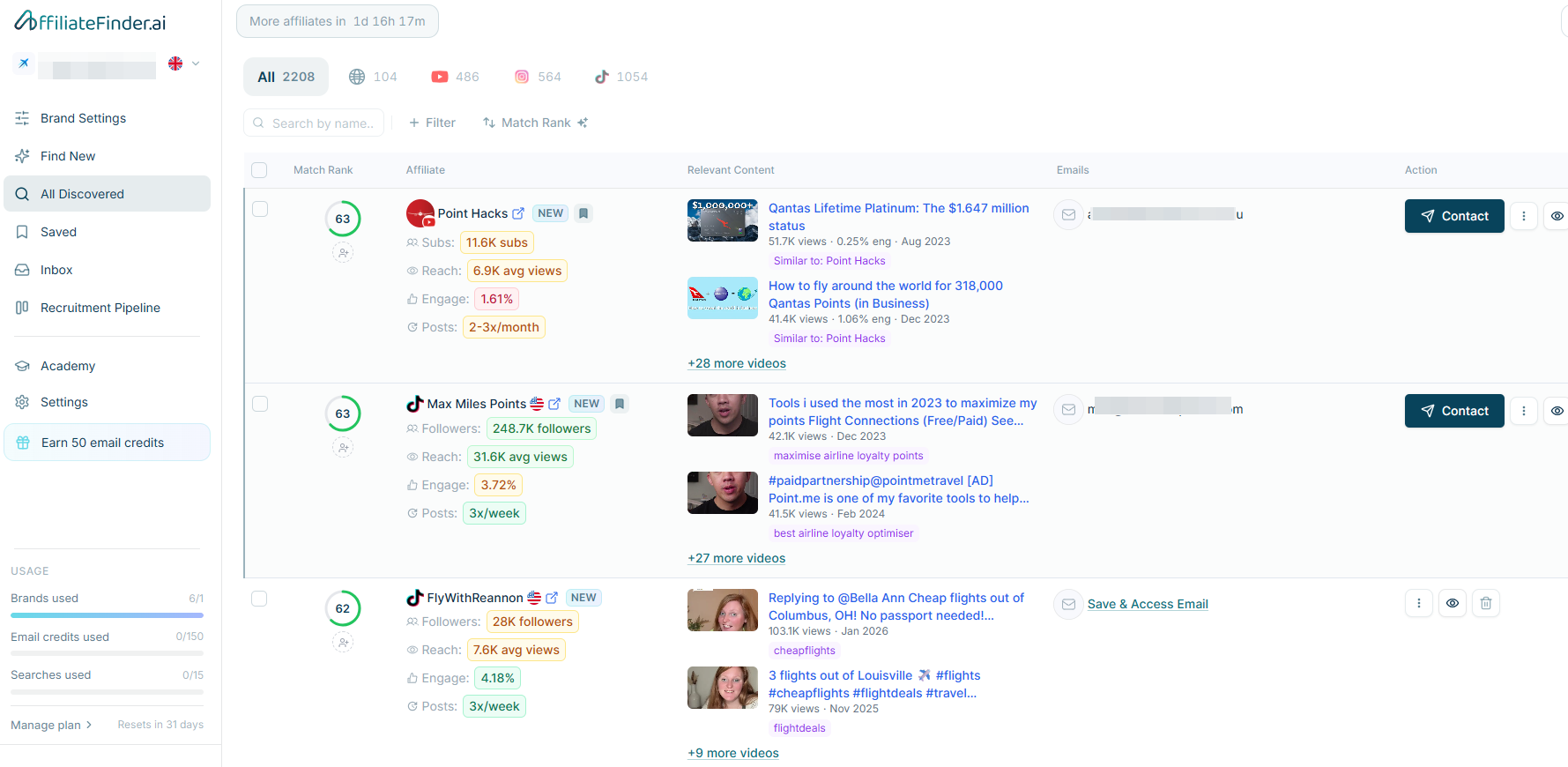
AffiliateFinder.ai works like a partner discovery engine. It regularly scans the internet to find new websites and social media channels that are perfect matches to promote you. So instead of random recruiting bursts, you can keep sourcing steady every week.
A simple workflow looks like this: pull a list of prospects, qualify quickly (traffic source, brand fit, audience), send a personalized outreach email (generated for you), then monitor your CRM in AffiliateFinder for responses.
Not only does it save you a bunch of research time; it makes you more consistent. When sourcing happens weekly, your program grows steadily.
3. FMTC: Stop drowning in deal changes and link updates
Promo updates are sneaky. One "what's the current offer?" email turns into ten, then you're forwarding details all afternoon.
FMTC helps you keep promos and link updates in a consistent place. Partners get the right offer, at the right time, without you acting as the human router. Start by making FMTC the default home for deal updates and using it to support your promo calendar. You'll cut down wrong-deal mistakes, plus the "wait, which link is live?" confusion.
4. HubSpot: Keep partner follow-ups, history, and reporting from falling through the cracks
HubSpot shines when you need partner CRM discipline. You get tasks, timelines, templates, contact history, and simple automations that keep momentum moving.
Set up basics like: an intro sequence after a partner applies, a reminder task when they go quiet, and a reactivation nudge for partners who haven't promoted in 60 days. The big win is leadership reporting. You can answer "what's happening this month?" without panic because the activity is already logged.
5. Typeless: Draft partner emails and promo copy faster, then edit like a human
Typeless is an AI drafting helper for weeks when typing words become a bottleneck. Typing is so 2020. It’s time you stepped up your Content-Making and mail-writing game with Typeless.
Use it to dictate outreach drafts, follow-ups, newsletter sections, promo blurbs, and short landing page snippets for partner kits. Then edit for brand voice, accuracy, and the real offer terms. A smart move is building a small library of approved phrases (value props, seasonal angles, compliance reminders) so you're not rewriting the same concepts every week.
6. Complily: Make compliance less of a fire drill
Compliance is never "done." It's either handled early or it explodes later.
Complily supports a process around disclosures and ad rules, so expectations are clear before partners publish. That reduces frantic takedowns, back-and-forth arguments, and the manual spot checks that eat your Friday. Start by using it to standardize your rules and partner education, then monitor the repeat offenders more closely instead of policing everyone equally.
Check out their FTC compliance and trademark protection tools to make your life easier.
7. You Can Book Me: The most flexible calendar booking system
You Can Book Me makes scheduling a call so much easier with partners. The back and forth of availability on an email thread is annoying and can be alleviated with one phrase at the end of an email: ”Let me know a few times and dates that work for you. If it's easier for you, my calendar link is below where you can book a time.”
Alternatively, Hubspot (or any CRM for that matter) will have a built-in calendar setting link, but it will not be as flexible and dynamic as You Can Book Me.
Put the tools together into a weekly flow that saves 10 to 20 hours
Buying seven tools won't save you time. A weekly cadence will. The goal is fewer decisions, fewer status checks, and fewer "where are we on this?" messages.
The "Recruit, Run, Protect" workflow
Think of your week like a gym plan. If you "work out when you can," it rarely happens. A schedule makes it automatic.
Source partners with AffiliateFinder, then sign them up through Endorsely. Keep ongoing comms, reminders, and partner history inside HubSpot. Push deals through FMTC so promos don't live in email threads. Draft faster with Typeless (then edit), and keep standards tight with Complily.

A simple rhythm you can copy:
● Monday: sourcing and list building
● Tuesday: outreach and follow-ups
● Wednesday: onboarding and activation (assets, links, first promo)
● Thursday: optimization (top partners, placements, content angles)
● Friday: reporting plus a quick compliance and brand check
Once it's routine, your brain stops treating it like five separate jobs.
When to invest based on your program stage
Early-stage programs can stay scrappy longer than people think. Still, if follow-ups slip or partner context gets lost, you've outgrown spreadsheets.
In growth stage, recruitment velocity and reporting requests jump. That's when a pipeline tool and CRM structure pay back fast because they keep you consistent under pressure.
Mature programs face higher compliance and brand risk. At that point, monitoring and enforcement tools become less "nice to have" and more "protect the business."
Frequently asked questions about affiliate management tools
What are the best time-saving tools for affiliate managers?
The best stack covers categories, not hype: recruitment pipeline, partner discovery, deal management, CRM, faster writing, compliance support, and brand protection. The seven tools above map to each of those jobs, so you can pick based on your bottleneck.
Do small affiliate programs need automation tools?
Not always. If you have a small partner set and stable promos, manual can work. On the other hand, once you repeat the same onboarding answers, juggle frequent offer changes, or worry about compliance, automation starts saving real hours.
How many tools should an affiliate manager use at once?
Keep it lean. Start with 2 to 3 tools(recruitment pipeline, CRM, promo management). Add compliance support and brand monitoring as partner volume and risk rise. Too many logins create tool bloat, which turns into more work.
What tasks take the most time in affiliate management?
Recruitment, onboarding, follow-ups, asset chasing, reporting, and compliance monitoring take the bulk. Still, the biggest drain is often context switching, not any single task.
Can automation replace an affiliate manager?
No. Tools can speed up admin work and reduce errors. Relationships, negotiation, creative strategy, and partner trust still need a human who pays attention.
When should you upgrade from spreadsheets?
Upgrade when follow-ups slip, partner notes scatter across inboxes, handoffs break, reporting takes hours, and nobody can point to a single source of truth. Also upgrade when compliance checks feel manual and inconsistent.
How do you measure ROI on tools for affiliate managers?
Track time saved per week, faster activation speed, outreach response rates, fewer compliance issues, fewer missed promo deadlines, and cleaner reporting cycles. Then watch for revenue lift over time, because better focus usually leads to better partner performance.
Conclusion
Time gets lost in repeat work, scattered info, and manual policing. The fix isn't working harder, it's building a simple system: recruit faster, run smoother, and protect the program.
Pick one bottleneck and make a move this week: adopt one tool and one process change, then lock it into your schedule. The right tools for affiliate managers don't just save hours, they give you room for the work that actually grows revenue, building partner relationships that last.


